





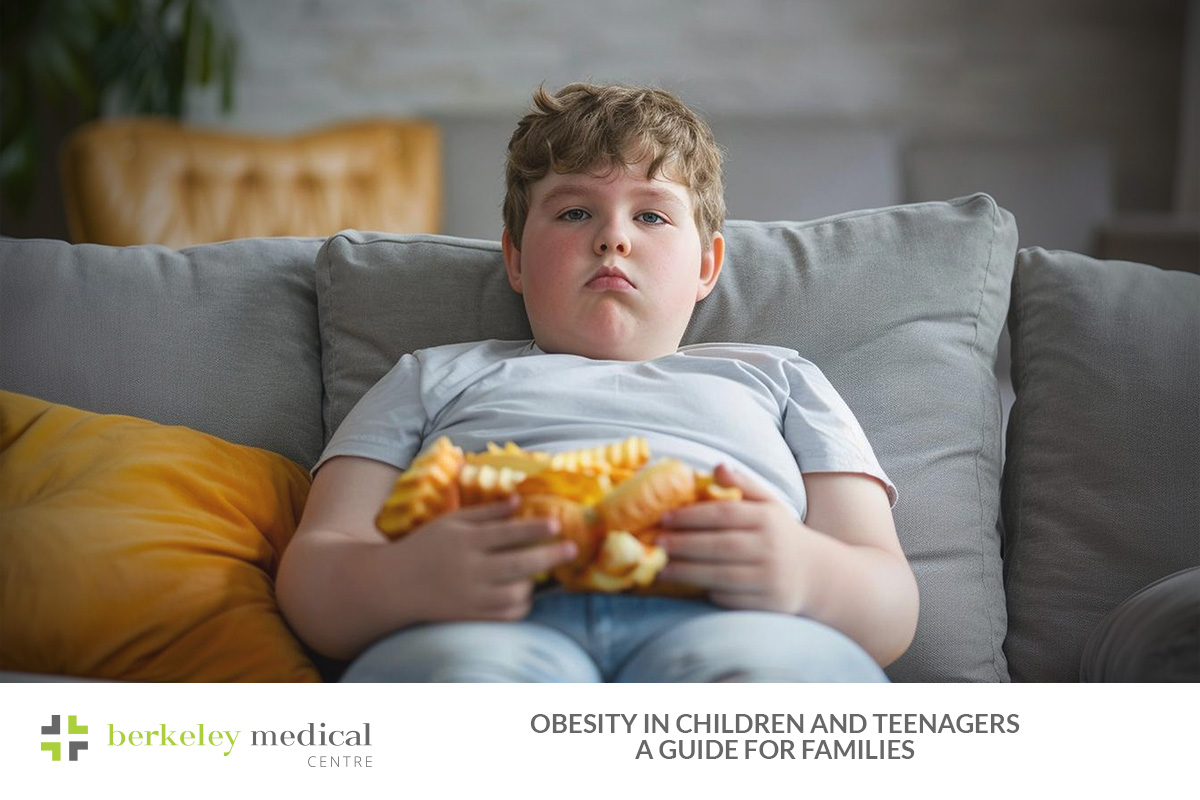
Obesity in children and teenagers is a sensitive topic. Many parents worry about saying the wrong thing. Many young people already feel pressure from school, sport, social media and friends. The goal should never be shame. The goal is health, confidence and long-term support.
In Australia, about 1 in 4 children aged 4 to 15 years live with overweight or obesity. Obesity in children can affect physical health, mental health and emotional wellbeing. It can also increase the chance of weight concerns continuing into adulthood.
For families in Brisbane, a GP can help make sense of growth, weight, nutrition, movement, sleep and emotional health. Berkeley Medical Centre in Kenmore provides children’s health care, general medicine, chronic disease management, mental health care and allied health services.
What is obesity in children and teenagers?
Children grow at different rates. Some grow taller first. Some gain weight before a growth spurt. This is why adult BMI calculators do not give the full picture for children.
For children over 2 years, doctors may use BMI-for-age percentile charts. These compare a child’s BMI with others of the same age and sex. BMI-for-age between the 85th and 95th percentile may indicate overweight. A BMI-for-age at the 95th percentile or higher may indicate obesity.
BMI is only one tool. It does not show muscle, puberty stage, family history or emotional wellbeing. A GP can review the full picture and guide next steps.
Why childhood obesity can happen?
Childhood and teenage obesity usually develops over time. It can involve food, activity, sleep, genetics, medicines, hormones, stress and family routines.
A child may take in more energy from food and drinks than their body uses through growth, play and exercise. Over time, unused energy can increase body fat. Some causes sit outside a child’s control. These may include hormonal problems, some prescription medicines and genetic conditions.
Common contributing factors may include:
✔ Frequent sugary drinks or large portions
✔ Regular takeaway or high-energy snacks
✔ Low physical activity
✔ Long screen time
✔ Poor sleep routines
✔ Emotional eating or stress
✔ Family history of weight-related conditions
✔ Medical conditions or medicines
This is not about blame. It is about finding small, realistic changes that fit your child’s life.
Signs parents may notice
Obesity is not always easy to identify by appearance. Children vary in height, body shape and growth timing. A parent may notice clothes becoming tight faster than expected. A teenager may avoid sport, swimming or social activities. Some children may complain of tiredness, joint discomfort or poor sleep.
Other signs may include:
- Shortness of breath during normal activity
- Snoring or restless sleep
- Low mood or reduced confidence
- Teasing or school avoidance
- Increased hunger or frequent snacking
- Concerns about blood pressure or cholesterol
These signs do not confirm obesity. They do suggest a GP review may help.
Health risks linked with obesity in children
Weight concerns can affect more than appearance. Childhood obesity may contribute to joint stress, sleep apnoea, high blood pressure, high cholesterol and type 2 diabetes. It can also affect self-esteem, friendships and school experiences.
Some teenagers also experience body image worries. They may withdraw from sport or avoid medical appointments. A supportive approach matters. Language should focus on strength, energy, sleep, mood and health.
Try saying “Let’s build healthier routines together” rather than “You need to lose weight.” Children often respond better when the whole family joins in.
When should your child see a GP?
A GP appointment is helpful when you feel concerned about your child’s weight, eating patterns, activity level or mood. See a doctor when lifestyle changes are not helping, or when weight concerns affect mental health. A GP may also refer your child to other health professionals when needed.
You may also book a GP visit if your child has:
- Rapid weight gain
- Ongoing tiredness
- Snoring or sleep concerns
- High thirst or frequent urination
- Irregular periods in teenage girls
- Bullying or low self-esteem
- Family history of diabetes or heart disease
- Concerns about medicines or hormones
A GP may check height, weight, growth pattern, blood pressure and lifestyle history. They may discuss blood tests when clinically appropriate.
Healthy goals: not crash diets
Children and teenagers need nutrients for growth, learning and development. Strict dieting can be harmful. Treatment usually aims to help children achieve a healthy weight over time. Younger children may need to “grow into their weight” rather than deliberately lose weight.
A healthy plan may include:
- More water and fewer sugary drinks
- Regular meals with vegetables, protein and wholegrains
- Less screen time during meals
- More family activity
- Better sleep routines
- Healthier lunchbox habits
- Support for mood and stress
- Regular GP follow-up
Small changes can work better than sudden rules. For example, start with water at dinner, a walk after school, or one extra vegetable at meals.
Movement that feels realistic
School-aged children need regular activity. Children and young people should aim for at least 60 minutes of physical activity each day. It also recommends limiting recreational screen time.
This does not need to mean gym sessions. Try walking the dog, backyard cricket, dancing, swimming, cycling, playground time or weekend bushwalks. In Brisbane suburbs like Kenmore, families can use local parks and walking paths to build activity into normal routines.
Teenagers may prefer choice and privacy. Ask what they enjoy. A sport they choose will usually last longer than one forced on them.
Food habits without food fights
Healthy eating works best when it feels normal, not punishing. Keep regular meals. Avoid calling foods “bad”. Use words like “everyday foods” and “sometimes foods”.
Helpful family habits include:
- Eat meals together when possible
- Keep fruit visible and easy to grab
- Offer vegetables in familiar meals
- Reduce soft drink, juice and flavoured milk
- Avoid screens during dinner
- Let children stop when full
- Avoid using food as a reward
Parents do not need perfect meals. Consistency matters more.
Support for families at Berkeley Medical Centre
If you are concerned about obesity in children or teenage weight concerns, speak with a GP at Berkeley Medical Centre in Kenmore. A calm, supportive appointment can help your family understand what is happening and choose practical next steps. Appointment through HotDoc for Berkeley Medical Centre.
*This information is for general education only and does not replace professional medical advice. Seek advice from qualified health professionals.
Also Read: