





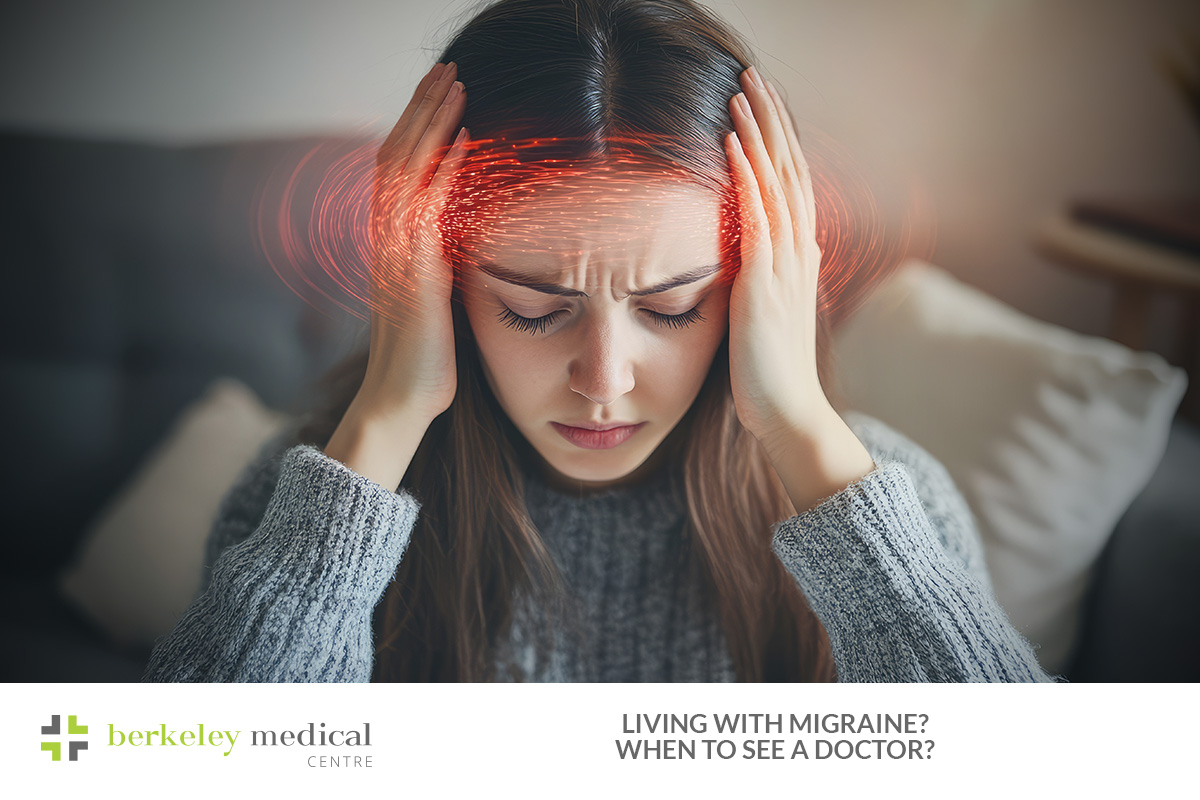
Migraine can interrupt daily life without warning. One attack may affect work, parenting, school, driving, sleep and social plans. Some people lose hours. Others lose days.
Migraine is a common condition that affects the brain. Symptoms may include severe headache, nausea, vomiting, and sensitivity to light or sound. Some people also experience aura before or during an attack. Aura can affect vision, speech or sensation.
For people in Brisbane, a GP can help identify migraine patterns. They can also check for other causes of headache. Berkeley Medical Centre in Kenmore provides general medicine, preventative health, chronic disease management, mental health care and allied health services.
What does migraine feel like?
Migraine symptoms vary between people. Some people feel warning signs before pain starts. Others wake with a severe headache already underway.
A migraine headache often feels throbbing. It may sit on one side of the head. It can worsen with movement. Bright lights, loud sounds and strong smells may feel unbearable. Nausea and vomiting can also occur. An untreated migraine attack can last between 4 hours and 3 days.
Some people get aura. This may include flashing lights, blind spots, zigzag lines, dizziness, numbness or difficulty speaking. About 1 in 3 people with migraine may experience aura symptoms.
Migraine can also cause “brain fog” after the pain settles. You may feel drained, moody or slow for the rest of the day.
Common migraine triggers
Migraine triggers differ from person to person. A trigger for one patient may not affect another. This is why a migraine diary can help.
Several common triggers, including missed meals, certain foods, sleep changes, weather changes, hormonal changes, screens, bright lights, loud noises, strong smells, stress and strong emotions.
Common triggers may include:
• Skipping breakfast or long gaps between meals
• Too much or too little sleep
• Dehydration during hot Brisbane weather
• Alcohol, caffeine changes or certain foods
• Stress from work, study or caregiving
• Hormonal changes around periods or menopause
• Screen glare, bright light or loud environments
• Strong perfumes, smoke or chemical smells
Try not to blame yourself for triggers. Migraine is a complex condition. Your goal is to spot patterns and reduce avoidable risks.
Keep a migraine diary
A migraine diary can make appointments more useful. It helps your GP see patterns across weeks or months.
Record:
- The date and time symptoms started
- Pain location and severity
- Aura, nausea or sensitivity symptoms
- Sleep, meals, caffeine and water intake
- Stress levels and screen exposure
- Medicines used and how well they worked
- Period timing, if relevant
- Recovery time after the attack
A migraine diary may help with diagnosis. It may also help you avoid triggers and prevent future attacks.
When should you see a GP for migraine?
You should see a GP if headaches feel severe, frequent, unusual or hard to manage. A GP can ask about symptoms, examine you and decide whether tests or referrals are needed. There is no specific test for migraine. Doctors may investigate other causes of headache when clinically appropriate.
Book a GP review if:
- You get repeated severe headaches
- Your headache pattern changes
- Migraine affects work, study or caring duties
- You need pain medicine often
- You feel anxious about symptoms
- Nausea or vomiting becomes hard to manage
- Headaches affect sleep or daily function
- You are pregnant and experience migraine
If you already have a migraine diagnosis, see your doctor again if headaches change or worsen.
When migraine symptoms need urgent care
Some headache symptoms need urgent medical attention. Calling triple zero is advised if you have a sudden severe headache, or a headache with symptoms that concern you.
Seek urgent care for a headache with:
- Sudden, severe onset
- Vomiting, confusion or neck stiffness
- Blurred or double vision
- Fever or seizure
- Loss of balance
- Head injury
- Pain that worsens over weeks
- Headache worse when lying down
- Morning headache with nausea that does not settle
These symptoms do not always mean something serious. They do need prompt medical assessment.
How migraine may be treated
Migraine care often includes both attack treatment and prevention. During an attack, resting in a quiet, dark room, sleeping, using cold or heat packs and gently stretching the neck.
Medicines may include pain relief, anti-inflammatory medicines, triptans or anti-nausea medicines. Some options need a prescription. A doctor or pharmacist can help choose suitable options for your health history.
Do not take pain medicine too often. Frequent pain relief can lead to medication overuse headache. If you need medicine several times a month, speak with a GP about prevention options.
Preventative care may include sleep routines, regular meals, exercise, stress support and avoiding known triggers. A doctor may suggest preventive medicine when migraine attacks occur on more than 2 to 4 days each month.
Migraine, mental health and daily life
Migraine can affect confidence and mood. It can make people cancel plans and worry about the next attack. Migraine can make work, caregiving and self-care difficult. It can also link with sleep problems, anxiety and depression.
Support matters. A GP can help explore stress, sleep, medicine use and emotional wellbeing. Berkeley Medical Centre lists mental health care among its services. The clinic also provides general medicine and chronic disease management for ongoing health needs.
Practical next steps for migraine care
Living with migraine can feel unpredictable. Yet many patients improve their control with the right plan. Start by tracking symptoms. Notice sleep, food, hydration, stress and medicine use. Seek help early if migraine affects your routine.
A Brisbane GP can help you understand your symptoms and reduce risk. They can also guide safe treatment choices and urgent care decisions.
GP support for migraine in Kenmore, Brisbane
Berkeley Medical Centre supports patients with GP-led assessment, preventative health care, chronic disease management, mental health care and referral pathways. Migraine is personal, and care should match your symptoms, health history and daily needs. Berkeley Medical Centre appointments are listed through HotDoc on the clinic website.
*This information is for general education only and does not replace professional medical advice. Seek advice from qualified health professionals.
Also Read: