





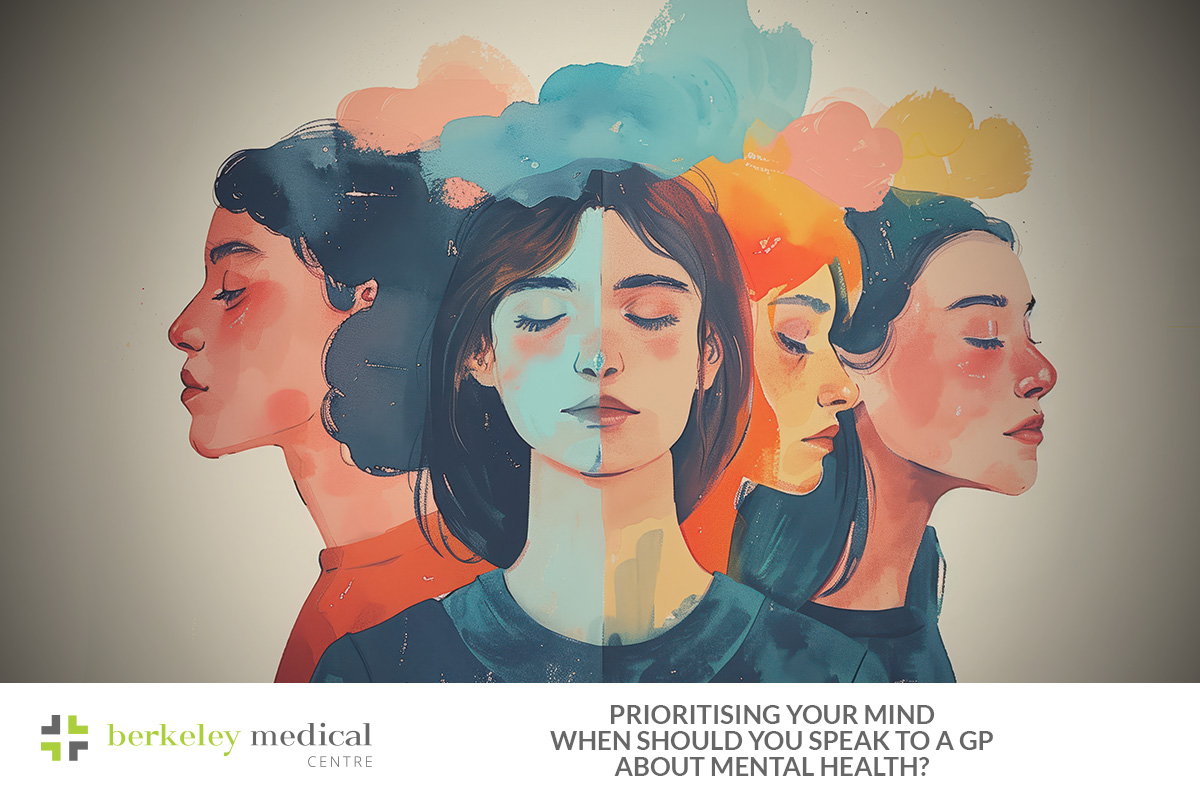
Mental health can change gradually. You may notice poor sleep, constant worry, irritability or less interest in usual activities. Sometimes these changes settle with rest and support. At other times, they persist or begin affecting daily life. Speaking with a GP can help you understand what may be happening and what support could suit you. You do not need to wait until a problem becomes severe before starting that conversation.
When Is It Time to Talk About Mental Health?
Mental health concerns can look different between people. Consider speaking with a GP if changes in your thoughts, emotions or behaviour continue or worry you.
It is also worth seeking help when they affect work, study, relationships or everyday routines.
Signs may include:
- Feeling anxious, overwhelmed or constantly on edge
- Low mood that does not seem to lift
- Losing interest in activities you usually enjoy
- Changes in sleep or appetite
- Ongoing irritability, anger or restlessness
- Difficulty concentrating or making decisions
- Feeling unusually tired or lacking motivation
- Withdrawing from friends, family or social activities
- Increasing alcohol or drug use to cope
- Feeling unable to manage normal responsibilities
These signs do not confirm a mental health condition. They are reasons to consider a professional conversation.
You Do Not Need to Be in Crisis to See a GP
Many people delay talking about mental health because they think their concerns are not serious enough.
A GP appointment can be useful before symptoms become overwhelming. You can also discuss poor sleep, panic symptoms, grief, workplace stress or relationship difficulties.
You do not need to know what diagnosis fits your experience. Explain what has changed and how it affects you.
What Can a GP Do for Mental Health?
A GP can provide an initial assessment and discuss your symptoms, health history and current circumstances.
They may ask about sleep, mood, stress, work, relationships and physical health. They may also ask about medicines, alcohol or other substances.
Some physical conditions can contribute to fatigue, poor concentration or mood changes. Your GP can consider whether further medical assessment may help.
Depending on your needs, care may include:
- Practical strategies for sleep, stress and daily routines
- Counselling and supportive GP care
- Discussion of treatment options
- Review of medicines when relevant
- A mental health treatment plan, when appropriate
- Referral to a psychologist, psychiatrist or another professional
- Follow-up appointments to review progress
Mental healthcare often develops over time. One appointment may start the process rather than complete it.
How to Prepare for a Mental Health GP Appointment?
Talking about mental health can feel unfamiliar. A little preparation can make the appointment easier.
Write down the main changes you have noticed. Include when they started and whether they are getting better or worse.
Think about how the issue affects sleep, work, relationships and everyday tasks. Bring a current medicines list if you take regular medication.
You can also write down questions before the appointment. This helps when stress makes it difficult to remember details.
Mental health discussions may need more time than a short consultation allows. Consider asking the clinic about appointment length when booking.
What Is a Mental Health Treatment Plan?
A GP may discuss a mental health treatment plan if it suits your circumstances.
The plan records your needs, treatment goals and recommended support. It can also help coordinate care with eligible mental health professionals.
A plan is not required for every mental health concern. Your GP will assess whether it is appropriate.
If referral is recommended, your GP can explain the next steps.
When Might a Psychiatrist Be Involved?
Some mental health concerns may benefit from specialist psychiatric assessment.
Psychiatrists are medical specialists who assess and treat mental health conditions. They can consider diagnosis, medicines and broader treatment needs.
A GP can advise whether specialist referral may be appropriate.
Berkeley Medical Centre has visiting psychiatrist Dr Rory Grinsill in Kenmore. He provides adult psychiatry services for referred patients within his scope of practice.
Mental Health Can Affect Physical Health Too
Mental and physical health often influence each other.
Stress can affect sleep, appetite, energy and concentration. Persistent low mood may reduce motivation for exercise or social contact.
Long-term physical illness can also affect emotional wellbeing. Living with pain, diabetes or another chronic condition can create extra stress.
This is why your GP may ask about both physical and mental symptoms.
What If Life Stress Is the Main Problem?
You do not need a diagnosed mental health condition to discuss stress with a GP.
Work pressure, caring responsibilities, financial worries and relationship changes can all affect wellbeing. Major life events may also change how you sleep, eat or cope.
A GP can help you explore the impact of these pressures. They can also discuss practical support and referral options.
When Mental Health Needs Urgent Help
Some situations need immediate support rather than a routine GP appointment.
Call Triple Zero on 000 if you or another person is in immediate danger. This includes immediate risk of self-harm or harm to others. You can also contact Lifeline on 13 11 14 for 24-hour crisis support. Do not wait for a routine appointment when someone is at immediate risk.
Start the Conversation When Something Does Not Feel Right
You do not need to have the perfect words before speaking with a GP.
If anxiety, low mood, stress, sleep changes or emotional difficulties are affecting daily life, consider raising them.
A conversation can help clarify what you are experiencing and identify practical options for support.
For people seeking a mental health GP in Brisbane or Kenmore, Berkeley Medical Centre provides primary mental healthcare and referral pathways.
Prioritising your mind can start with a simple sentence: “I have not been feeling like myself lately.”
*This information is for general education only and does not replace professional medical advice. Seek advice from qualified health professionals.
Also Read: