





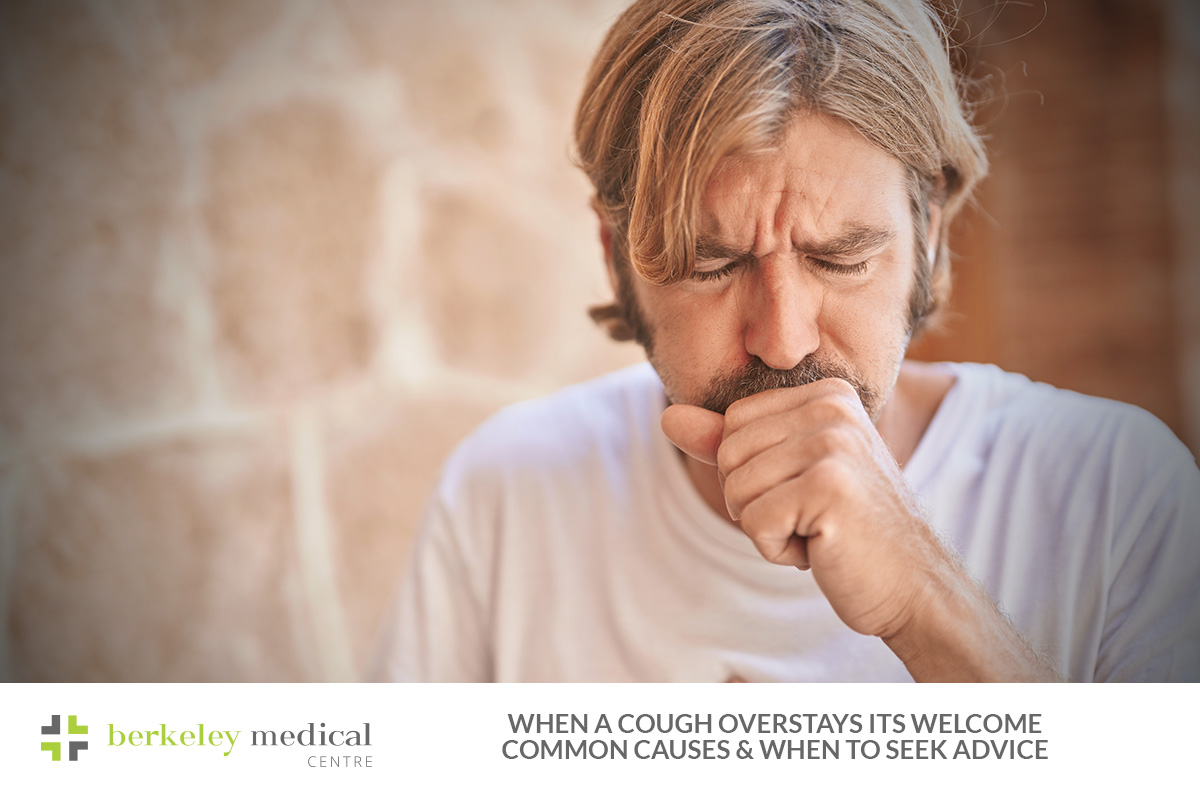
A cough that lingers long after other symptoms disappear can feel frustrating. Perhaps your cold has cleared, but that irritating tickle remains. Maybe you’re coughing through meetings, losing sleep or wondering whether something else is happening.
Persistent coughs have several possible causes, ranging from lingering airway irritation to allergies and underlying respiratory conditions.
Most coughs improve naturally. However, their duration, severity and accompanying symptoms can help determine whether medical advice is appropriate.
At Berkeley Medical Centre in Kenmore, Brisbane, we encourage informed conversations about changing symptoms and everyday respiratory health.
How Long Is Too Long for a Cough?
Coughing is a natural reflex that helps clear mucus, dust and irritants from your airways.
However, not every cough follows the same timeline.
- Acute cough: Generally lasts less than three weeks and commonly follows a respiratory infection.
- Subacute cough: Lasts between three and eight weeks, sometimes following a viral illness.
- Chronic cough: Continues beyond eight weeks in adults and warrants medical assessment.
A cough lasting several weeks does not automatically indicate a serious condition.
Nevertheless, Australian health guidance recommends seeking medical advice when coughing continues beyond three to four weeks without improvement.
For children, a daily cough lasting more than four weeks also requires assessment.
Common Causes of a Persistent Cough
Understanding possible triggers can help you recognise patterns and explain your symptoms during a GP consultation.
1. Post-Viral Cough: When the Cold Has Gone
Have you recovered from a cold but still experience occasional coughing? Respiratory infections can leave your airways irritated and sensitive. Even after the infection resolves, everyday activities may trigger coughing.
Common triggers include:
- Talking or laughing
- Cold air
- Exercise
- Strong smells
A post-viral cough often improves gradually. However, symptoms that worsen or persist need further consideration.
2. Allergies and Post-Nasal Drip
Not every lingering cough starts in the lungs.
Allergies and sinus conditions can cause mucus to travel down the back of your throat. Healthcare professionals call this post-nasal drip or upper airway cough syndrome.
You might notice:
- Frequent throat clearing
- A tickling sensation
- Nasal congestion
- Coughing that worsens when lying down
Environmental triggers, including pollen, dust and smoke, may contribute. A GP can assess whether nasal or sinus symptoms relate to your cough.
3. Asthma and Sensitive Airways
Some people experience coughing as a prominent asthma symptom.
Asthma affects the airways and may cause inflammation, narrowing and sensitivity.
Possible symptoms include:
- Coughing during the night
- Wheezing
- Chest tightness
- Shortness of breath
Exercise, respiratory infections and environmental triggers can also influence symptoms.
Importantly, coughing alone does not confirm asthma. A GP may consider breathing tests and other assessments.
4. Acid Reflux and Throat Irritation
Surprisingly, a persistent cough may sometimes relate to digestive health.
Gastro-oesophageal reflux disease (GORD) occurs when stomach contents move back towards the oesophagus.
Reflux can irritate the throat and contribute to coughing. Some people experience heartburn or a sour taste. Others notice coughing after meals or while lying down.
Your GP may explore digestive symptoms alongside your respiratory health.
5. Environmental Irritants and Smoking
Air quality can influence how frequently someone coughs. Cigarette smoke, vaping, workplace dust and chemical fumes may irritate the respiratory system.
Repeated exposure can worsen existing respiratory symptoms. If coughing regularly occurs in particular environments, consider discussing these patterns with your GP.
Reducing exposure to known irritants may form part of an individual care plan.
6. Medications and Other Medical Conditions
Certain medicines, including some blood pressure medications, can cause a persistent dry cough.
However, never stop prescribed medication without professional advice.
Other possible causes include chronic obstructive pulmonary disease (COPD), whooping cough and ongoing respiratory infections.
Less commonly, persistent coughing can indicate other significant lung or heart conditions.
Medical assessment helps identify which possibilities deserve further investigation.
Dry Cough vs Chesty Cough: Does the Difference Matter?
A dry cough produces little or no mucus. It often feels irritating or ticklish.
A chesty cough brings up mucus, also called phlegm.
Both cough types can follow respiratory infections or occur with other conditions.
The colour of mucus alone cannot reliably identify whether antibiotics are necessary.
A GP considers your symptoms, medical history and examination findings before recommending an appropriate approach.
When Should You See a GP About a Persistent Cough?
Consider arranging a GP consultation if your cough:
- Lasts beyond three to four weeks without improvement
- Becomes more frequent or severe
- Regularly interrupts sleep
- Occurs alongside unexplained tiredness
- Comes with recurring fever or unexplained weight loss
- Involves changes in breathing or wheezing
Seek prompt medical assessment if you cough up blood or develop concerning breathing symptoms.
Call Triple Zero (000) for severe breathing difficulty, persistent severe chest pain, collapse or blue lips.
These symptoms require emergency care rather than a routine appointment.
What Happens During a GP Cough Assessment?
A GP consultation usually begins with understanding your symptoms.
Your doctor may ask:
- When did the coughing begin?
- Is it dry or productive?
- Does it worsen at night?
- Have you experienced fever, wheezing or breathlessness?
- Do you smoke, vape or encounter workplace irritants?
- Have you recently started any medications?
Your GP may examine your throat, chest and breathing.
Depending on clinical findings, further investigations may include lung function testing, imaging or other appropriate assessments.
Not everyone needs testing. Recommendations depend on symptoms, examination findings and individual risk factors.
What Can Help While a Cough Settles?
For uncomplicated coughs, everyday self-care may offer some comfort.
Consider these general measures:
- Stay hydrated: Fluids can help maintain comfort and soothe throat irritation.
- Prioritise rest: Allow time for recovery following respiratory illness.
- Avoid smoke: Reduce exposure to smoking, vaping and strong irritants.
- Try honey: Honey may soothe coughing in adults and children over 12 months.
- Monitor symptoms: Notice changes in duration, frequency and associated discomfort.
Never give honey to infants under 12 months.
Cough remedies are not suitable for everyone. Ask a pharmacist or healthcare professional before using them, particularly for children. Antibiotics do not treat viral infections, and their use depends on clinical assessment.
Persistent Coughs in Children: What Should Parents Know?
Coughs are common during childhood, especially following viral infections.
However, parents should monitor changes in breathing, activity, feeding and general wellbeing.
A daily cough lasting longer than four weeks deserves GP assessment.
Seek medical advice sooner if your child experiences worsening symptoms, fever, wheezing or difficulties with feeding.
Severe breathing difficulty requires emergency attention.
Don’t Ignore a Cough That Keeps Returning
An occasional cough is often part of everyday recovery. However, persistent or worsening symptoms deserve attention.
Understanding your symptoms and recognising changes can help guide sensible healthcare decisions.
If your cough continues, affects daily activities or raises concerns, consider discussing it with a GP.
At Berkeley Medical Centre, we’re here to support informed conversations about your respiratory health.
Location Targeting: Kenmore, Brisbane, Queensland, Australia.
*Medical disclaimer: This article provides general health information and does not replace individual medical advice, diagnosis or treatment. Seek GP or specialist consultation in case of any health issues.
Also Read: