




Screens have become part of almost every working day. Many people move between laptops, phones, tablets and televisions for hours. Add air conditioning, commuting and long drives, and your eyes may start feeling uncomfortable.
Burning, grittiness, redness or watery eyes can sometimes relate to dry eye. The condition develops when your tears cannot lubricate the eye surface effectively. Your eyes may produce too few tears, or those tears may evaporate too quickly.
Understanding your daily triggers can make dry eye symptoms easier to manage.
What Does Dry Eye Syndrome Feel Like?
Dry eye syndrome, also called dry eye disease, can affect people differently. Symptoms may also become more noticeable as the day progresses.
Common symptoms include:
- Gritty or sandy-feeling eyes
- Burning, stinging or soreness
- Red or irritated eyes
- Watery eyes
- Tired eyes after screen use
- Blurred or fluctuating vision
- Sensitivity to light
- Difficulty wearing contact lenses
Watery eyes may seem surprising. However, irritation can trigger extra tearing without fixing poor lubrication on the eye surface.
Persistent symptoms deserve attention, especially when they affect work, driving, reading or other daily activities.
Can Screen Time Cause Dry Eyes?
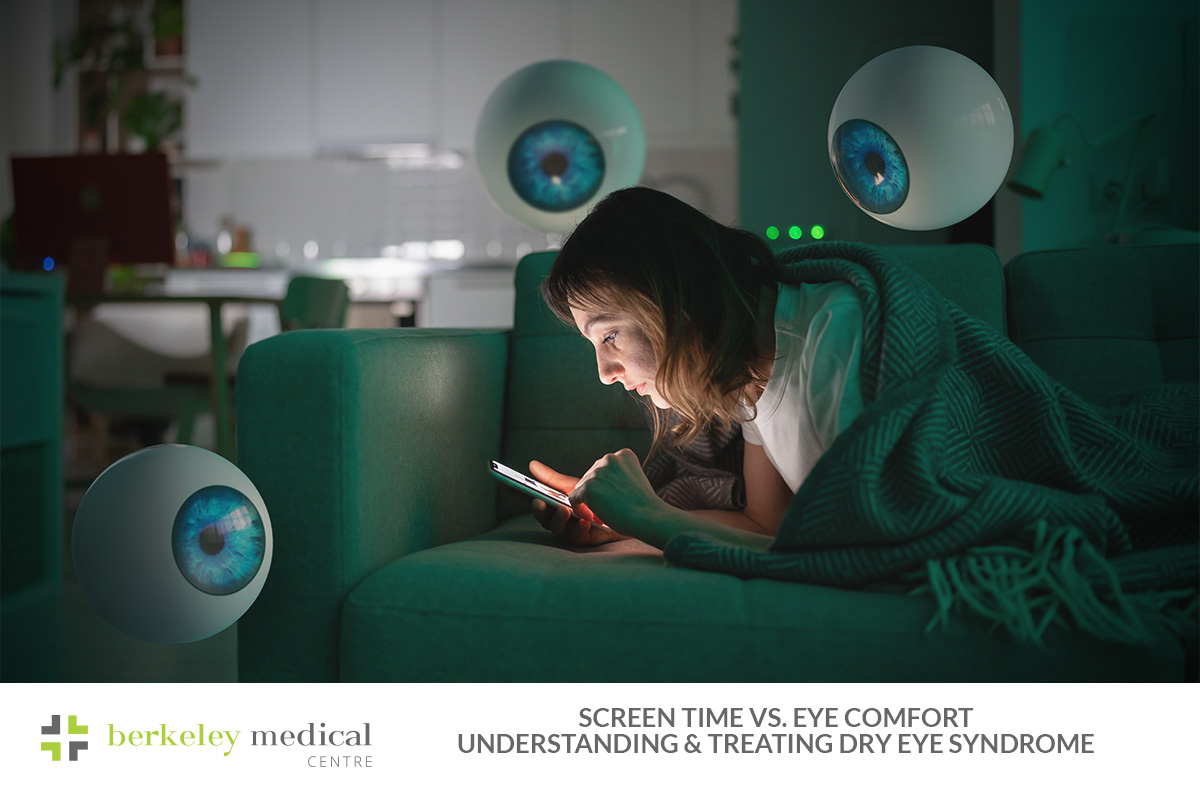
Long periods of screen use can contribute to dry eye symptoms.
When you concentrate on a laptop or phone, you may blink less often. Blinking spreads tears across the surface of your eyes. Reduced blinking can allow moisture to evaporate more quickly.
This helps explain why your eyes may feel comfortable in the morning but irritated after several hours at work.
Digital eye strain can also cause tired eyes, headaches or difficulty focusing. Dry eye and eye strain can occur together, although they are not the same condition.
Taking regular visual breaks can help reduce discomfort during long periods of concentrated work.
Why Office Work Can Leave Your Eyes Feeling Dry
Screens are only one part of the modern office environment.
Air conditioning can reduce humidity and increase airflow around your eyes. Sitting directly under a vent may make symptoms more noticeable.
Long meetings can also reduce opportunities to look away and blink normally. People may then continue using their phones during breaks.
Small changes can help.
Try moving away from direct airflow where practical. Position your monitor slightly below eye level. Remember to blink fully rather than staring continuously.
You can also follow the 20-20-20 approach. Every 20 minutes, look around 20 feet away for 20 seconds.
This gives your eyes a short break from close focusing.
What About Driving?
A long drive requires sustained visual attention.
Drivers constantly watch the road, traffic, mirrors and changing conditions. This concentration can contribute to eye strain. Airflow from vehicle vents may also increase dryness.
If your eyes become irritated while driving, avoid directing air conditioning straight towards your face.
Sunglasses may help protect against glare, wind and bright conditions during daytime driving. Your prescription should also remain current if you require glasses.
Do not ignore significant blurred vision or other visual changes while driving. Safe driving depends on clear vision and attention.
Everyday Factors That Can Make Dry Eye Worse
Dry eye often has more than one contributing factor.
Along with screen use and dry air, symptoms may relate to:
- Contact lens wear
- Smoke or windy environments
- Eyelid inflammation
- Age-related changes
- Some medicines
- Previous eye procedures
- Certain medical conditions
Some antihistamines and other medicines may contribute to dryness in some people.
Do not stop prescribed medicine because you suspect a side effect. Instead, discuss your symptoms and medicines with your GP or pharmacist.
This review can help identify whether another factor needs attention.
Practical Ways to Improve Eye Comfort
Start by identifying when your symptoms occur.
Do they appear after several hours at a computer? Are they worse during your commute? Do they improve when you leave an air-conditioned room?
Patterns can help guide practical changes.
Regular screen breaks may reduce strain and encourage normal blinking. Adjusting screen height, text size and lighting can also make computer work more comfortable.
Avoid direct airflow from fans or air-conditioning vents. A humidifier may help if indoor air feels particularly dry.
People who wear contact lenses may need shorter wearing periods during symptom flare-ups. Follow your optometrist’s advice about cleaning, replacement and safe wear.
Can Lubricating Eye Drops Help?
Artificial tears, also called lubricating eye drops, can help some people manage dry eye symptoms.
Different products have different formulations. Some suit occasional daytime use, while others provide longer-lasting lubrication.
Frequent users may need to consider preservative-free options. A pharmacist, GP or optometrist can help you choose a suitable product.
Avoid assuming every red-eye drop treats dry eye. Some products target redness rather than the cause of dryness.
Persistent symptoms may need a more detailed assessment instead of repeated self-treatment.
When Dry Eyes May Need a GP Review?
Occasional mild irritation may improve after changing your environment or taking screen breaks.
However, ongoing dry eye symptoms can sometimes relate to medicines, allergies, eyelid problems or wider medical conditions.
A GP can review your symptoms, health history and current medicines. They can also consider whether another condition may contribute to the problem.
At Berkeley Medical Centre in Kenmore, our GPs provide comprehensive general medicine and personalised healthcare. We place an emphasis on preventive care as well as managing current health concerns.
Our team can assess persistent eye discomfort within the context of your overall health. Where appropriate, your GP can recommend further assessment by an optometrist or ophthalmologist.
That broader view matters when eye symptoms occur alongside other concerns.
When Should You Seek Prompt Medical Attention?
Not every red, painful or irritated eye is dry eye.
Seek prompt medical advice if you have a painful red eye. Contact lens wearers should also arrange prompt assessment for a red eye.
Urgent assessment may be needed if you develop:
- Sudden or significant changes in vision
- Flashing lights or unusual visual changes
- Severe eye pain
- Pain when looking at bright light
- Eye injury or chemical exposure
- A severe headache with a red eye
- Rapidly worsening swelling or discomfort
These symptoms can point to conditions that need more urgent care.
Make Eye Comfort Part of Your Daily Routine
For many people, screens cannot simply disappear from daily life. Office work, study, communication and entertainment all depend on digital devices.
The goal is therefore not necessarily to avoid screens. It is to use them in ways that support greater eye comfort.
Build short breaks into your workday. Blink regularly. Review your workstation setup. Reduce direct airflow towards your eyes. Give your eyes time away from close-up tasks.
Most importantly, pay attention when symptoms keep returning.
Support for Persistent Dry Eye Symptoms in Kenmore
Dry, burning or gritty eyes can make a normal workday surprisingly uncomfortable. Persistent symptoms can also affect concentration, reading and driving.
At Berkeley Medical Centre, our Kenmore GPs can review ongoing eye discomfort, relevant medicines and other health factors. We can discuss appropriate first steps and arrange further assessment when required.
If screen use, air conditioning or daily activities keep triggering eye discomfort, consider discussing the pattern with your GP. Understanding the cause can help you choose a more appropriate management approach.
*This article provides general health information and does not replace individual medical advice, seek GP or specialist consultation in case of any eye health issues.
Also Read: