





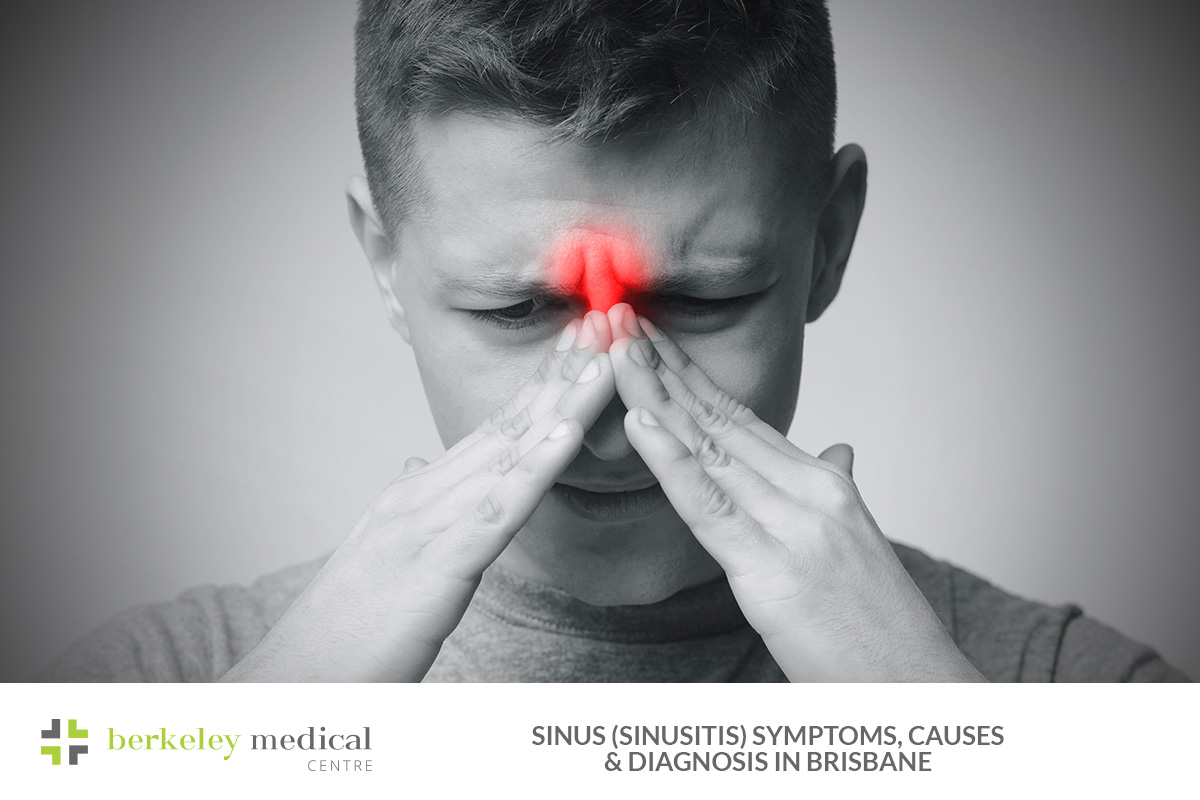
Sinus problems, medically known as sinusitis, are one of the most common reasons Australians visit their GP. In Brisbane and across Queensland, changes in weather, high pollen levels and frequent viral infections often trigger sinus issues. While many people assume ongoing congestion or headaches are part of a lingering cold, these symptoms frequently indicate a sinus infection that requires proper medical attention.
What this article covers
This comprehensive guide explains:
- What sinusitis is and how sinuses work
- Types of sinus infections
- Common sinus symptoms
- Causes and risk factors for sinusitis
- Sinus vs. cold, allergies and COVID-19
- How sinusitis is diagnosed
- How to prevent sinus infections
- When to see a GP for sinus problems
What is sinusitis?
Sinusitis is inflammation of the tissue lining the sinuses. Sinuses are air-filled cavities located behind the forehead, cheeks, nose and eyes. Normally, they produce mucus that drains through small channels into the nasal passages, helping filter bacteria, allergens and other particles from the air.
However, when these drainage pathways become blocked due to inflammation, mucus builds up inside the sinuses. As a result, pressure increases, pain develops and infection can occur. Because the nasal passages are usually inflamed at the same time, doctors often refer to this condition as rhinosinusitis.
Types of sinusitis
Healthcare providers classify sinusitis based on duration and cause.
Based on duration
Acute sinusitis
Acute sinusitis lasts less than four weeks and commonly follows a viral infection such as the common cold.
Subacute sinusitis
Subacute sinusitis continues for four to twelve weeks and may develop when an acute infection does not fully resolve.
Chronic sinusitis
Chronic sinusitis lasts longer than twelve weeks and is often linked to ongoing inflammation, bacterial infection or structural issues.
Recurrent sinusitis
Recurrent sinusitis occurs when a person experiences four or more sinus infections in one year, with symptoms clearing between episodes.
Based on cause
- Viral sinusitis, the most common type
- Bacterial sinusitis, often suspected when symptoms persist beyond ten days or worsen
- Fungal sinusitis, which is rare and usually affects people with weakened immune systems
Common symptoms of sinusitis
Sinus symptoms can range from mild to severe and often worsen when bending forward or during weather changes. Common sinus infection symptoms include:
- Blocked or stuffy nose
- Thick yellow or green nasal discharge
- Postnasal drip causing throat irritation
- Facial pain or pressure around the cheeks, eyes or forehead
- Sinus headaches
- Tooth or jaw pain
- Ear pressure or fullness
- Reduced sense of smell or taste
- Persistent cough, especially at night
- Bad breath
- Fatigue and low energy
- Fever in some cases
What causes sinus infections?
Several factors contribute to the development of sinusitis. Most commonly, viral infections such as colds or influenza cause inflammation that blocks sinus drainage. Bacteria may then grow in trapped mucus, leading to a bacterial sinus infection.
Other common causes and risk factors include:
- Seasonal and environmental allergies
- Asthma
- Smoking or second-hand smoke exposure
- Deviated nasal septum
- Nasal polyps
- Weakened immune system
- Frequent upper respiratory infections
Sinusitis vs. cold, allergies and COVID-19
Because these conditions share similar symptoms, many people find it difficult to tell them apart.
A common cold usually improves within a week and resolves gradually.
Allergies often cause sneezing, itchy eyes and a runny nose but rarely cause facial pain.
COVID-19 may cause fever, muscle aches, breathlessness and loss of taste or smell.
Sinusitis, however, typically involves thick nasal discharge, facial pressure and symptoms that persist or worsen over time.
For this reason, seeing a GP is important when symptoms do not improve.
How sinusitis is diagnosed
GPs diagnose sinusitis by reviewing symptoms and medical history. During an examination, they assess the nose, ears and throat for inflammation, discharge or blockage. If symptoms are persistent or severe, further investigations such as CT scans, nasal swabs or allergy testing may be recommended.
In cases of chronic or recurrent sinusitis, a referral to an ear, nose and throat (ENT) specialist may be required.
Preventing sinus infections
Although sinusitis cannot always be prevented, the following strategies may reduce the risk:
- Maintaining good hand hygiene
- Managing allergies effectively
- Avoiding smoking and smoke exposure
- Using saline nasal sprays regularly
- Supporting immune health through healthy lifestyle habits
- Reducing exposure to people with viral infections
Living with sinus problems
Most sinus infections resolve within one to two weeks. However, untreated or recurring sinusitis can affect sleep, concentration and overall quality of life. Seeking early medical advice helps prevent complications and supports faster recovery.
Medical review is recommended if symptoms last longer than ten days, facial pain becomes severe or sinus infections occur frequently. Urgent medical care is essential if high fever, confusion or vision changes develop.
How Berkeley Medical Centre supports care
At Berkeley Medical Centre, our GPs provide comprehensive assessment of conditions. We focus on diagnosis, evidence-based treatment and long-term prevention to help patients achieve better breathing and improved wellbeing.
Conclusion
Sinusitis is a common but often underestimated condition. With early GP assessment, appropriate treatment and preventive care, most people experience lasting relief and fewer recurrences. Understanding sinus symptoms and causes allows you to take timely action and protect your long-term sinus health.
*This information is for educational purposes only and does not replace professional medical advice. Always consult your GP or a qualified healthcare professional for diagnosis and treatment.