





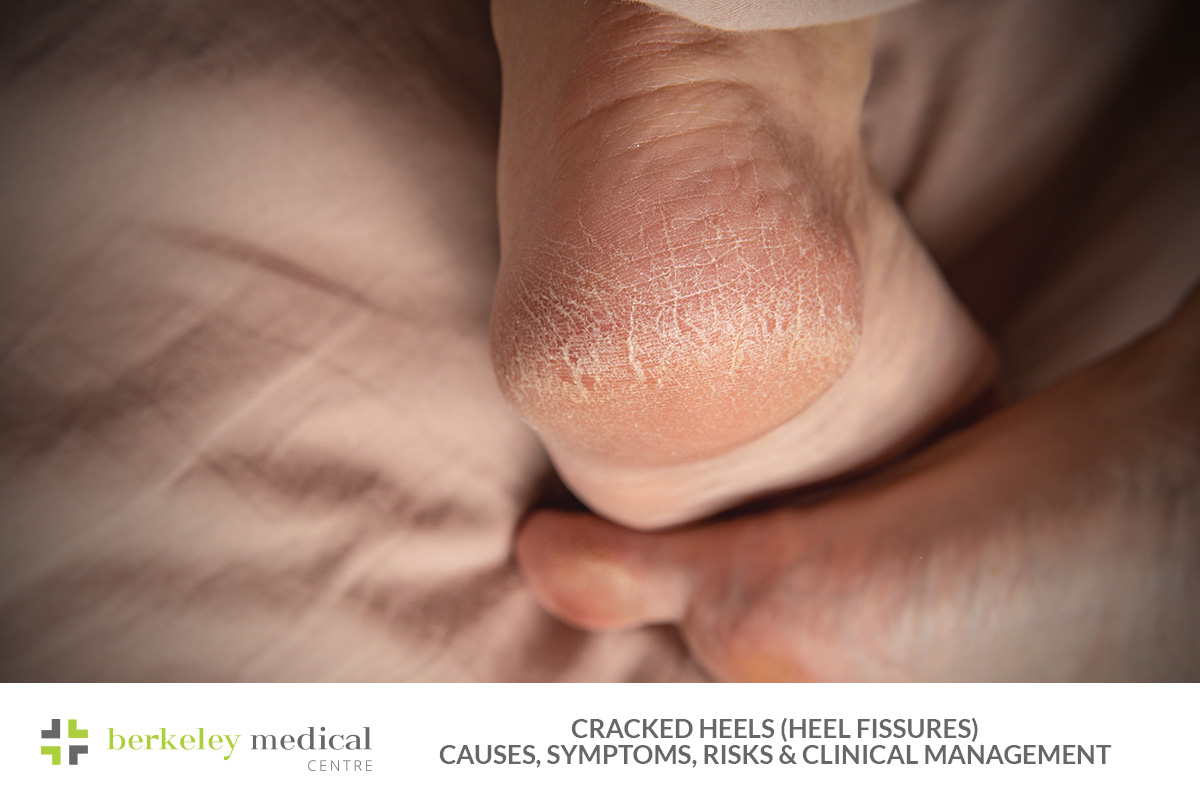
Cracked heels, clinically referred to as heel fissures, are a common foot condition frequently observed in general practice and podiatry settings across Australia. Although it often begins as mild dryness or thickened skin, they can progress into a painful and clinically significant condition when the skin splits deepen or become infected. This article explains cracked heel in detail, focusing on causes, symptoms, risks, clinical management and frequently asked questions.
What are cracked heels?
Cracked heels occur when the skin on the heel becomes dry, thickened and less elastic. The heel absorbs significant pressure during standing and walking. As a result, skin that lacks flexibility splits under mechanical stress, most commonly along the outer rim of the heel.
Initially, cracked heel present as rough or hardened skin. Over time, however, this dryness progresses into visible cracks. When these fissures deepen, they may cause pain, bleeding and a higher risk of infection.
Why cracked heels develop
Cracked heels usually develop in stages. First, dry and thickened skin forms around the heel margins, creating callus. Next, ongoing pressure causes the fat pad beneath the heel to expand sideways. Consequently, the surrounding skin stretches beyond its capacity and begins to crack.
Several factors commonly contribute to this process, including:
- Dry or dehydrated skin
- Prolonged standing, particularly on hard surfaces
- Footwear with limited heel support, such as open-back shoes, sandals and thongs
- Barefoot walking
- Increased body weight, which intensifies pressure on the heels
- Frequent exposure to hot water
In addition, certain medical conditions increase the likelihood of cracked heel. These include diabetes, hypothyroidism, atopic dermatitis, psoriasis (especially palmoplantar psoriasis), juvenile plantar dermatosis and palmoplantar keratoderma.
Who is most affected by cracked heels?
Cracked heels affect people of all ages and lifestyles. However, the condition appears more frequently in individuals exposed to repeated heel pressure or ongoing skin dryness. Furthermore, they carry greater clinical importance in people with diabetes, as reduced sensation and delayed wound healing increase the risk of complications.
Signs and symptoms of cracked heels
Cracked heels usually worsen gradually. Early signs may appear subtle, while advanced symptoms are more noticeable and clinically significant.
Common signs and symptoms include:
- Dry, rough or thickened skin around the heels
- Yellow or dark brown discolouration from callus build-up
- Visible superficial or deep heel cracks
- Pain or tenderness during standing or walking
- Flaking or scaling of surrounding skin
- Bleeding from deeper fissures
When infection develops, redness, warmth, swelling and increasing pain may also occur.
Risks and complications associated with cracked heel
As heel fissures deepen, the skin’s protective barrier breaks down. Consequently, bacteria can enter the underlying tissue. In some cases, this leads to cellulitis, a bacterial skin infection requiring clinical treatment.
Moreover, it poses increased risks for individuals with diabetes. In these cases, fissures may progress into diabetic foot ulcers, particularly when peripheral neuropathy is present. These ulcers often heal slowly and carry a higher risk of serious complications.
Clinical management of cracked heels
Clinical management focuses on restoring skin integrity, reducing callus thickness and minimising mechanical stress on the heel. Healthcare settings commonly use a combination of topical therapies, protective measures and pressure redistribution strategies.
In more advanced cases, trained healthcare professionals may perform mechanical debridement to remove hardened skin. In addition, strapping or dressings may limit skin movement, while prescription-strength topical therapies, pressure-relieving insoles or heel cups and tissue adhesives may support healing of deeper fissures.
Long-term considerations
Cracked heel often results from a combination of mechanical stress, environmental exposure and underlying medical conditions. Therefore, long-term clinical considerations focus on maintaining skin health, monitoring recurrence and identifying contributing systemic factors.
Regular foot assessments remain particularly relevant for individuals with chronic conditions that affect circulation, sensation or skin integrity.
Frequently Asked Questions about cracked heels
It develops when dry, thickened skin loses elasticity and splits under pressure. Callus formation and outward expansion of the heel fat pad play a central role in this process.
Cracked heel often begins as a cosmetic concern. However, deeper fissures can cause pain, bleeding and infection, making the condition medically significant.
Yes, deep heel fissures allow bacteria to enter the skin. This can lead to infections such as cellulitis, particularly when skin integrity is compromised.
Footwear with limited heel support allows the heel fat pad to spread outward. As a result, skin tension increases, which contributes to callus formation and cracking.
The time required varies depending on fissure depth, skin condition and contributing health factors. Mild cracks resolve more quickly than deeper fissures.
In people with diabetes, reduced sensation and delayed wound healing increase the risk of cracked heels progressing into diabetic foot ulcers.
Cracked heels in general practice care
In general practice, clinicians assess cracked heel within the broader context of a patient’s overall health, medical history and skin condition. This approach allows identification of contributing factors such as chronic disease, inflammatory skin conditions or biomechanical stress.