




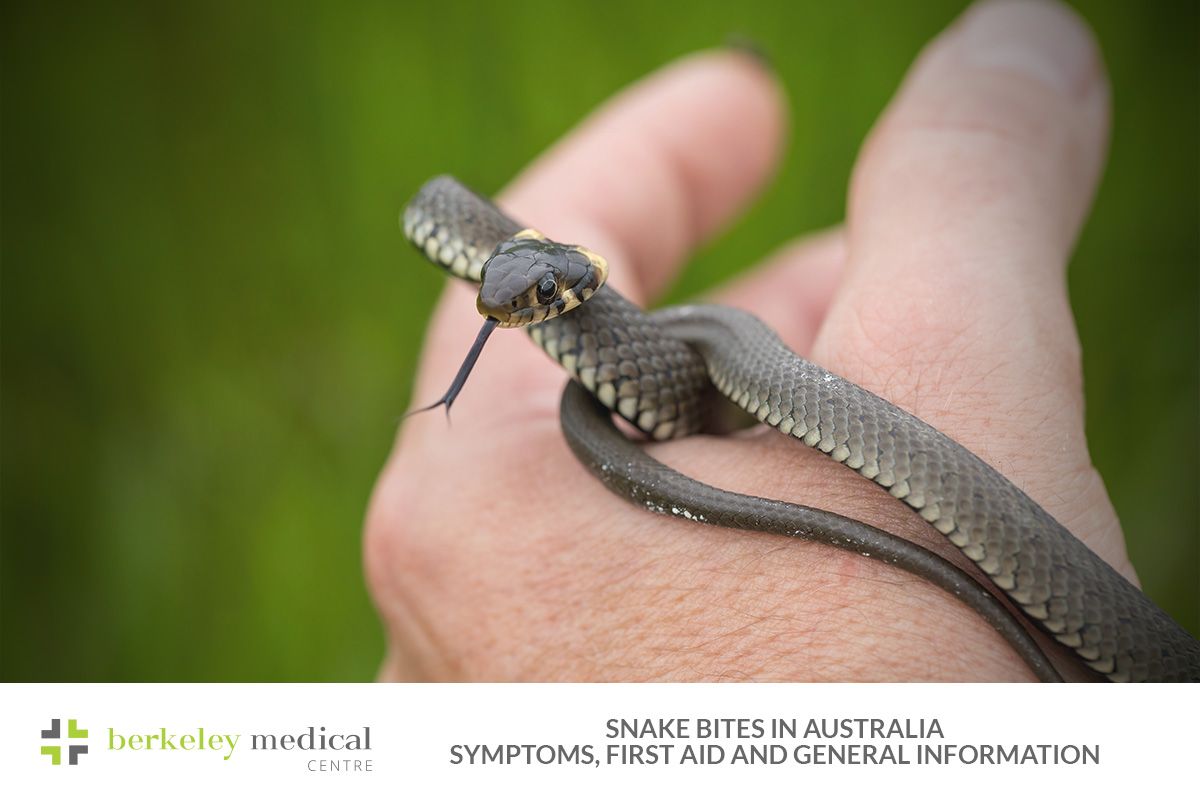
Australia has a diverse range of snake species, including many that are highly venomous. In fact, around 20 of the 25 most venomous snakes in the world live in Australia. Although snake bites occur infrequently, they can cause serious illness and are treated as medical emergencies.
For this reason, understanding how snake bites occur, recognising common symptoms and knowing general first aid principles helps improve awareness and early response. This article provides general information about snake bites, including symptoms, an overview of first aid, hospital treatment and common ways people reduce the risk of snake encounters.
What Is a Snake Bite?
A snake bite occurs when a snake bites the skin and may inject venom through its fangs. Venom acts as a poison that enters the bloodstream and can affect the nervous system, muscles and blood clotting.
Although not all snakes are venomous, identifying the snake after a bite often proves difficult. Therefore, healthcare systems in Australia treat all snake bites as medical emergencies, including bites from sea snakes.
In Australia, around one in three hospital presentations for snake bites involve brown snakes. Each year, between one and four deaths occur due to snake bites, which highlights the importance of early medical management.
Snake Bite Symptoms
Snake bite symptoms vary depending on the snake species, the amount of venom injected and how quickly medical care begins.
Local Symptoms at the Bite Site
Initially, a snake bite may cause:
- Bite marks that appear as puncture wounds or small scratches
- Swelling, bruising or bleeding
- Pain or tenderness near the bite, which may develop gradually
General Symptoms of Envenomation
As venom spreads through the body, additional symptoms may appear, including:
- Breathing difficulties
- Irregular heartbeat
- Nausea, vomiting or abdominal pain
- Headache, dizziness or confusion
- Blurred vision
- Muscle weakness or paralysis
Importantly, symptoms do not always appear immediately and may develop over several hours.
Severe Allergic Reaction (Anaphylaxis)
In rare cases, a snake bite can trigger anaphylaxis, a severe allergic reaction.
Symptoms of anaphylaxis include:
- Noisy or difficult breathing
- Swelling of the tongue or throat
- Wheezing or persistent coughing
- Difficulty speaking or hoarse voice
- Dizziness or collapse
- Pale or floppy appearance in young children
Because anaphylaxis progresses rapidly, it is considered a medical emergency.
What Causes Snake Bites?
Snakes produce venom in their salivary glands. When a snake bites, venom may be delivered under pressure through two fangs in the upper jaw.
Venomous snakes found in Australia include:
- Brown snakes
- Black snakes
- Tiger snakes
- Taipans
- Death adders
- Rough-scaled snakes
- Many sea snakes
Snake venom contains a mixture of toxins designed to immobilise prey. In humans, these toxins can affect multiple organs and body systems.
How Snake Bites Are Diagnosed
In hospital, healthcare professionals ask whether the snake was seen and what it looked like. They also examine the bite site and observe symptoms over time.
In addition, blood tests help determine whether venom is present and assess its effects on the body. These results support decisions about ongoing monitoring and treatment.
General Overview of Snake Bite First Aid
Snake bite first aid focuses on reducing movement and slowing the spread of venom until medical care becomes available.
In general, commonly referenced first aid principles include:
- Keeping the person calm and still
- Limiting movement of the affected limb
- Applying a pressure immobilisation bandage when appropriate
- Avoiding actions that may interfere with later assessment, such as washing the bite
However, first aid recommendations may vary depending on the situation and location.
*This information is for general education only and does not replace professional medical advice
Pressure Immobilisation Bandaging
Pressure immobilisation bandaging is widely used in Australia for suspected venomous snake bites.
This approach generally involves:
- Applying a firm bandage over the bite site
- Bandaging the entire limb from the fingers or toes upward
- Immobilising the limb to reduce movement
- Recording the time of the bite and bandage application
By doing so, this method aims to slow venom movement through the lymphatic system until medical care becomes available. *This information is for general education only and does not replace professional medical advice
Hospital Treatment for Snake Bites
In hospital settings, clinicians closely observe patients for signs of envenomation. Not all snake bites result in venom injection.
Antivenom is used in a small proportion of cases, estimated at around five percent. Clinicians base the decision to use antivenom on symptoms, blood test results and the type of snake likely involved.
Antivenom is available for all native Australian snakes and is administered under medical supervision.
Possible Complications of Snake Bites
In some cases, snake bites lead to complications such as:
- Excessive bleeding
- Muscle tissue breakdown, known as rhabdomyolysis
- Kidney injury
- The need for intensive care or surgical treatment
Fortunately, early hospital management reduces the likelihood of serious complications.
Snake Awareness and Risk Reduction
People commonly reduce the risk of snake bites by understanding where snakes may live. These environments include:
- Bushland and forests
- Long grass and leaf litter
- Areas near water sources
- Gardens, sheds and rural properties
In addition, people often reduce risk by wearing protective footwear, using torches at night and avoiding areas with limited visibility.
Generally, snakes try to avoid human contact and often move away when left undisturbed.
Emergency Contact Numbers (Australia)
For suspected snake bites or life-threatening symptoms:
- Call Triple Zero (000) for an ambulance
- If Triple Zero does not connect on a mobile phone, call 112
For general information and advice:
- National Poisons Information Centre: 13 11 26
Conclusion
Snake bites in Australia are uncommon but potentially serious. By understanding snake bite symptoms, general first aid principles and hospital treatment processes, people can improve awareness and support timely medical care when required.
*This information is for general education only and does not replace professional medical advice. Snake bites are medical emergencies and require urgent care from qualified health professionals.